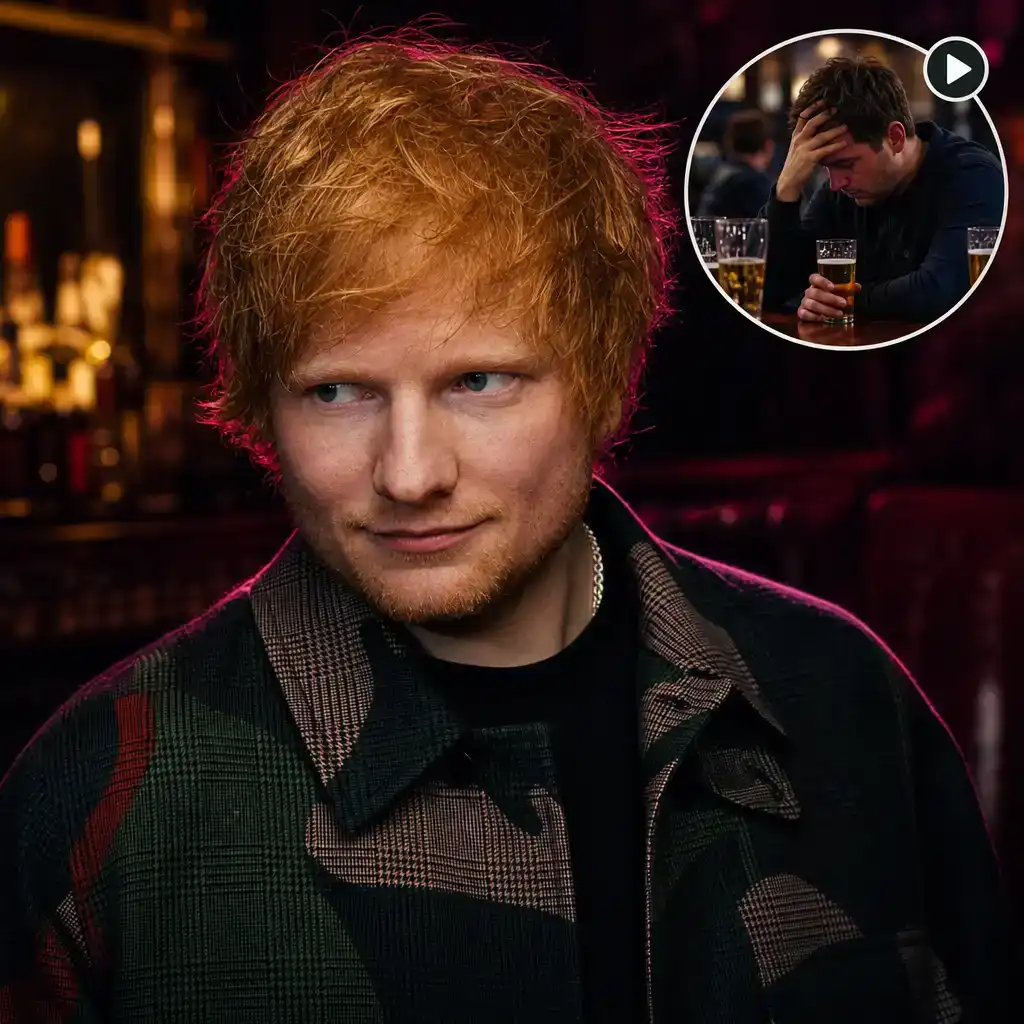
Ed Sheeran’s drinking comments have sparked a fresh argument about whether alcohol can be separated from the culture surrounding it. The only problem with calling this a new controversy is that the interview is two years old.
The 35-year-old singer made the disputed remarks on episode 512 of comedian Theo Von’s podcast This Past Weekend, released on June 25, 2024. A resurfaced excerpt attracted more than one million views on X in July 2026, prompting accusations that Sheeran was excusing “functional alcoholism.” No substantive new response from Sheeran or his representatives has emerged.
The clip also generated broad claims about angry American viewers, although independent reporting has not established the nationality or overall scale of the backlash. What is clear is that the discussion reached far beyond one old celebrity interview.
What did Ed Sheeran say about British drinking culture?
Sheeran described meeting a friend in the United States for three pints and contrasted that with what he saw as a more routine relationship with alcohol in Britain and Ireland.
“I’m generalising, not everyone loves drinking,” he said, before estimating that “80% of people in England love a beer.” He claimed Americans often visited sports bars intending to become heavily intoxicated, while people in England, Ireland, Scotland and Wales were more likely to have one or two pints after work.
He then offered a rather less moderate Friday example: “six pints, a bottle of wine” and shots.
According to Sheeran, drinking every day in England was “not alcoholism” because it formed part of the culture. A crew member added that beer accompanies happy and sad occasions, including weddings and funerals.
“But it’s not alcoholism, it’s the culture,” Sheeran repeated. He distinguished accepting an invitation from a friend from feeling that he needed a drink.
Von responded that identifying as an alcoholic was partly a personal determination. That distinction matters, although neither cultural acceptance nor personal identity provides a medical diagnosis.
Why did the old podcast clip cause a backlash?
The timing helped turn the excerpt into a deceptively current controversy. The interview had been publicly available since 2024, but the shortened clip circulated widely in July 2026 without always making its age obvious. It is unclear who first pushed the excerpt back into wider circulation.
Some social media users called Sheeran “ignorant” or accused him of describing addiction as culture. One commenter argued that alcohol affects the body regardless of national customs. Another said drinking becomes alcoholism when it damages work, relationships or other parts of a person’s life.
A user who described losing an ex-husband to chronic alcoholism said his drinking had begun with similar explanations. Others used the phrase “functional alcoholism” to describe the pattern Sheeran outlined.
British responses were more divided. Some agreed that he was describing ordinary social drinking, while others suggested his account applied more specifically to London. Piers Morgan joined in by joking that British people simply had a “stronger constitution” than Americans.
That national contest was the least medically useful part of the debate. Alcohol does not adjust its risks after checking a passport.
Does daily drinking automatically mean alcoholism?
Medical guidance does not fully support either extreme presented in the online argument.
The United States National Institute on Alcohol Abuse and Alcoholism says drinking every day, by itself, does not establish alcohol-use disorder. Diagnosis depends on a problematic pattern involving symptoms such as impaired control, significant distress or continued drinking despite harmful consequences.
The Centers for Disease Control and Prevention similarly says most people who drink excessively do not have alcohol-use disorder. That supports the narrower point made by commenters who rejected the idea that frequency alone determines addiction.
However, it does not make regular drinking harmless. The World Health Organization says no level of alcohol consumption is risk-free and classifies alcohol as a toxic, dependence-producing Group 1 carcinogen.
British guidance advises men and women not to regularly exceed 14 units a week, preferably spread across at least three days, with several alcohol-free days where possible. Fewer than 14 units is described as lower risk, not safe.
A regular-strength pint contains roughly two units, while a bottle of 12% wine contains about nine. Sheeran’s Friday example therefore comes to approximately 21 units before any shots are counted. That is:
- 50% above the full weekly lower-risk guideline
- More than twice the eight-unit single-session binge threshold for men
- Concentrated into one evening rather than spread across several days
Culture may explain a pattern. It does not reduce the dose.
Is starting to drink young protective?
Sheeran also defended Ireland against stereotypes and suggested that earlier exposure helped people learn their limits. He said he had his first beer at about 12 or 13 and had learned to manage alcohol by 16, while many Americans first encountered it later because the legal drinking age is higher.
The legal age is 18 in the United Kingdom, 21 in the United States and generally 19 in Canada, except in Alberta, Manitoba and Quebec, where it is 18.
Sheeran’s suggestion that starting young teaches safer drinking conflicts with guidance from the National Institute on Alcohol Abuse and Alcoholism. It says people who begin drinking before age 15 face a higher risk of developing alcohol-use disorder later.
The broader British public-health picture also complicates any reassuring account of normalized drinking. The Office for National Statistics recorded 9,809 alcohol-specific deaths in the United Kingdom in 2024. Scotland and Northern Ireland had the highest rates among the four nations.
Those figures do not mean everyone who has a drink after work has an addiction. They do show why the line between familiar behavior and harmful behavior deserves more care than a national comparison can provide.
How has Sheeran’s own drinking changed?
Sheeran has spoken openly about periods when alcohol became excessive. In a 2017 appearance on Ireland’s Late Late Show, he said, “I drink everyday,” while indicating that he did not consider it a problem.
He later described touring habits that involved drinking through the night and said that period became one of his lowest points. At one stage, he was consuming up to 10 pints in an evening.
His approach changed before the birth of his first daughter, Lyra. Sheeran said his wife, Cherry Seaborn, asked whether he wanted somebody else to drive her to hospital if her waters broke because he had been drinking.
“I don’t ever want to be pissed holding my kid. Ever, ever,” he later told Rolling Stone.
Sheeran, who also shares daughter Jupiter with Seaborn, has not committed to permanent sobriety. He has distinguished having a couple of beers from drinking a bottle of vodka and has said he did not want to become either an alcoholic older musician or a completely sober one.
His relationship with drugs also changed after the death of his close friend Jamal Edwards in 2022. Edwards, who played a major role in launching Sheeran’s career, died aged 31 after a cardiac arrest attributed to cocaine use and alcohol. Sheeran said taking drugs again would be disrespectful to his friend’s memory.
Where support is available
Anyone concerned about their own drinking or somebody else’s can contact Drinkline, the United Kingdom’s national alcohol helpline, confidentially on 0300 123 1110. It operates from 9am to 8pm on weekdays and from 11am to 4pm on weekends.
Alcoholics Anonymous also provides free peer support through its 12-step programme.
The resurfaced interview does not prove that Sheeran was describing alcohol-use disorder, either in himself or anyone else. It does show how easily cultural familiarity can be mistaken for medical reassurance. Those are not the same thing, however normal the invitation for a pint may feel.