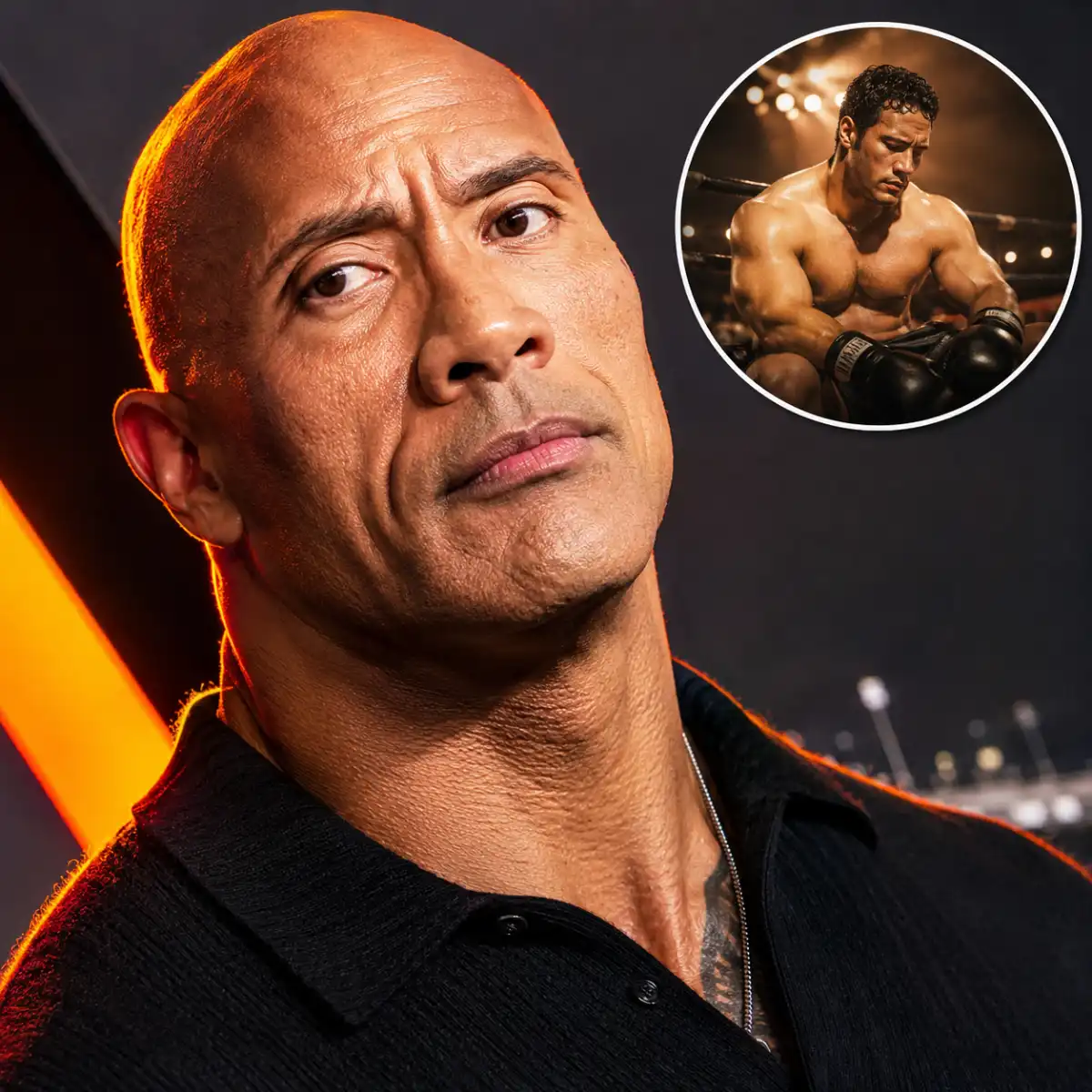
Dwayne Johnson's cancer scare arrived on a day when he was supposed to be charming a room full of people for work, because celebrity schedules apparently do not pause for medical anxiety. In a new Esquire cover story tied to Disney’s live-action Moana, Johnson said he found a lump on one of his testicles earlier this year, just before an all-day Jumanji press appearance at CinemaCon in Las Vegas.
The actor, who is returning as the demigod Maui in Moana, went to a doctor the morning before the event. According to Esquire, the doctor examined the lump and said it was likely epididymitis, an inflammation of a tube at the back of the testicle that stores sperm. Still, cancer had not been ruled out.
What happened before Johnson’s CinemaCon appearance
Johnson told the magazine his doctor asked what his schedule looked like that day. The answer was not exactly restful: an all-day Jumanji event, with speeches, jokes and the usual public-facing energy expected from one of Hollywood’s most reliable blockbuster stars.
The doctor told him he needed an ultrasound first thing the next morning. That left Johnson with a full day of public appearances and a private, unresolved fear sitting in the background.
“So I had to live with that for those 24 hours, not knowing, and I had to be on all day, joking around, making speeches. But! I’m okay,” Johnson said.
The diagnosis turned out to be epididymitis, not cancer. There’s less polish behind even the smoothest press tour.
Why The Smashing Machine still matters to him
The Esquire interview also revisited Johnson’s recent dramatic turn in A24’s The Smashing Machine, which marked a notable shift away from the large-scale franchise roles that have defined much of his film career.
The film premiered at the Venice Film Festival and quickly drew Oscar talk, helped in part by some of the strongest reviews Johnson has received as an actor. He was visibly emotional during a standing ovation for the movie, breaking down in tears at the festival.
Despite the early awards conversation, Johnson was not nominated for best actor earlier this year. He did not try to pretend that the miss meant nothing.
“It would have been incredible to get nominated for an Oscar,” he told Esquire. “I realized very quickly that it’s a rare thing to reach this pinnacle where you’re even having these conversations. And it’s exciting! It would have been amazing. I wish it happened. But it didn’t.”
Johnson added that he never bought into the idea that the nomination did not matter. “I always thought it mattered. And it has lit a fire in my spine, which is: Let’s go back to work.”
Why Johnson is keeping politics private
Johnson was more open about awards disappointment than he was about politics, a subject he now says he is deliberately avoiding in public.
In 2024, he told Fox News that he regretted endorsing Joe Biden in the 2020 presidential election because he believed it created division among his fans. At the time, he said, “My goal is to bring this country together. I believe in that. There will be no endorsement. At this level of influence, I will keep my politics to myself. It is between me and the ballot box.”
Speaking to Esquire, Johnson framed that choice as a matter of focus rather than simple caution.
“What I have learned through experience is that I need to keep, need, not want, the main thing,” he said. “And the main thing for me, the thing that in the morning I swing my legs out of bed and I run towards, is creating. It’s art. It’s storytelling.”
He added that he has learned to keep his politics private, while leaving room for difficult conversations in other areas. “Politics is omnipresent and it’s forever. I don’t like it. I hate it at times. I hate the slinging. I hate all the bullshit that comes with it.”
Subtle, no. Clear, yes.
How he views AI and major change
Johnson may be closing the door on public political endorsements, but he is not dismissing every uncomfortable subject. Esquire noted that when artificial intelligence came up, including its potential threats, he was “cautiously interested, even excited.”
Johnson’s view, for now, sounds like guarded curiosity.
“I’ve always been an advocate for embracing big change, after taking a hard look at it,” Johnson said. “We can either stick our heads in the sand and be afraid, or we can say, ‘Okay, we’re here. Let’s see. Let’s explore.’”
That thread runs through the interview: a health scare squeezed between press obligations, awards hopes turned into motivation, politics pushed out of the spotlight, and AI treated as something to study before judging. Johnson is back in familiar blockbuster territory, but the personal stakes are real.