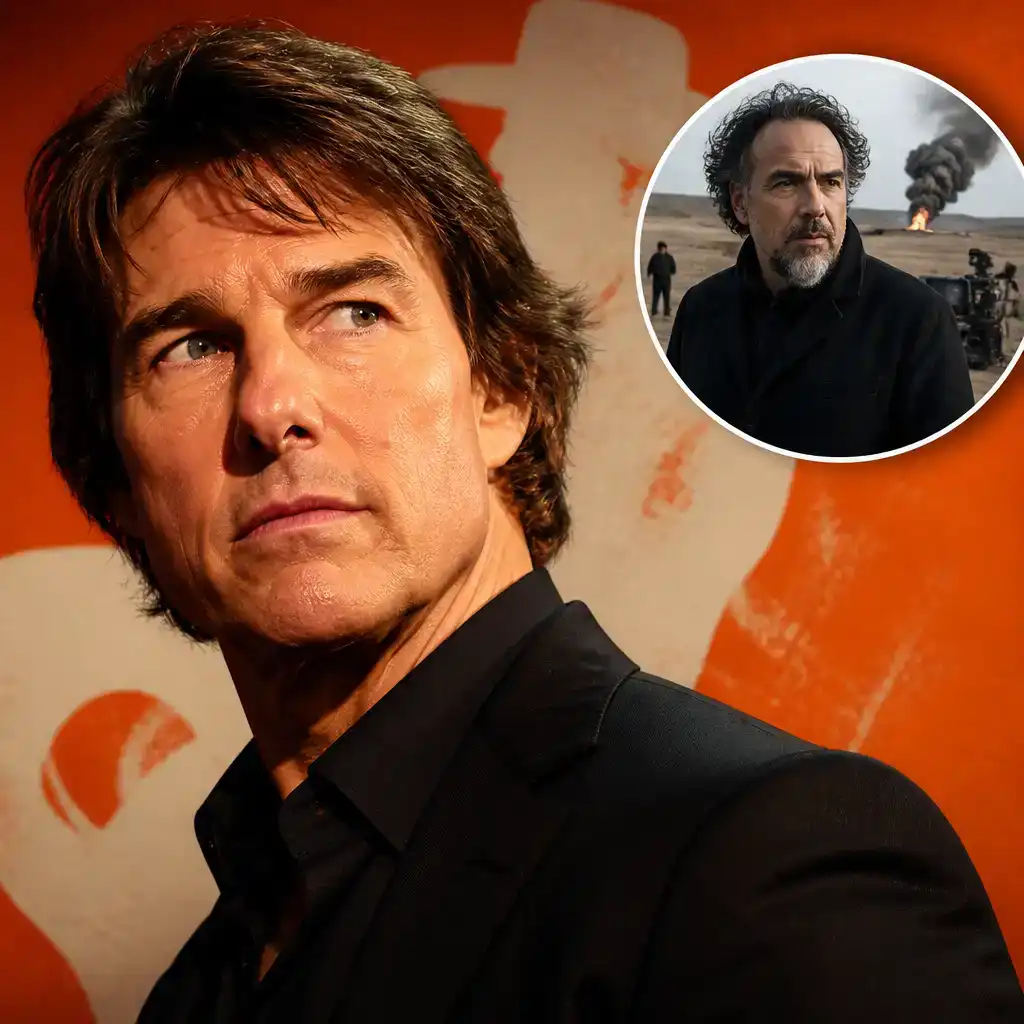
The Digger box office bomb has delivered Tom Cruise his weakest US opening in nearly two decades. Alejandro G. Iñárritu’s new film earned roughly $8 million over its first weekend, a grim start for a production reportedly costing between $140 million and $180 million.
That gap does not require advanced accounting. Unless international audiences, awards voters or unusually patient cinema-goers intervene, the film faces a difficult financial future.
Critics were divided before its release. Digger held a 51% approval rating on Rotten Tomatoes, while one prominent UK review awarded it two stars. Audiences have now supplied their own review, this time through ticket sales.
Why Digger represented a major change for Cruise
Cruise has spent much of his recent career reinforcing his status as Hollywood’s most committed action star. The Mission: Impossible films regularly place him on motorcycles, aircraft and other objects that insurers would prefer actors to avoid. Top Gun: Maverick, meanwhile, passed $1 billion worldwide.
Digger offered something markedly different. Rather than another familiar franchise, Cruise appeared under heavy prosthetics and surrendered himself to Iñárritu’s distinctive, often demanding filmmaking style. The director behind Birdman and The Revenant was never likely to produce a relaxed crowd-pleaser built around uncomplicated heroics.
At 64, Cruise also seemed to be acknowledging an obvious professional reality: even he cannot perform enormous stunts indefinitely. The film suggested a possible transition away from permanent action hero status and back toward the character-focused work that shaped earlier parts of his career.
A return to the actor behind the stunts
Before Cruise became closely associated with increasingly elaborate physical spectacle, he built his reputation through films including Rain Man, Jerry Maguire and Magnolia. Those performances required more than sprinting with impressive posture. They gave him room to play insecure, difficult and emotionally unstable characters.
For all its flaws, Digger asks him to work in that register again. His performance is volatile and deliberately strange, showing the kind of commitment he usually reserves for hanging from moving machinery.
The result has split viewers and critics, but that division is part of what made the project interesting. A major star taking an expensive creative risk will not always produce a universally admired film. Sometimes it produces arguments, bafflement and a Rotten Tomatoes score hovering around the halfway mark. That is still more interesting than a career managed entirely by brand recognition.
The problem is that Cruise is not only an actor. He is also a highly influential producer and businessman who understands exactly what an $8 million opening means beside a budget approaching $180 million.
Could the poor opening change his career plans?
The commercial response may discourage Cruise from taking similarly ambitious roles. His next announced project already returns him to familiar ground: Days of Thunder 2, a legacy sequel co-starring Anne Hathaway.
After that, he is widely expected to move toward the developing Top Gun 3. Both projects offer established characters, recognisable titles and significantly less uncertainty than an original Iñárritu production. Studios tend to find those qualities soothing.
Successful sequels could restore some commercial momentum and give Cruise enough confidence, or industry leverage, to attempt another unconventional project later. The less encouraging possibility is that Digger convinces him to spend the remainder of his leading-man years inside dependable franchises.
Awards season could still alter the story. If the film remains part of the Oscar conversation and earns Cruise an Academy Award nomination, its reception may look less disastrous by early 2027. Prestige does not repay a production budget, but it can redefine what Hollywood considers a worthwhile failure.
If the film disappears from both cinemas and awards ballots, however, the lesson taken by Cruise and the studios may be brutally simple: audiences prefer him near a cockpit.
How Digger compares with notorious box office failures
It is too early to calculate the film’s full loss across its complete theatrical and distribution run. For context, these productions are commonly listed among cinema’s largest financial failures, based on the reported budgets and worldwide grosses supplied:
- Lolita (1997): $62 million budget, $1.1 million worldwide gross
- Heaven’s Gate (1980): $44 million budget, $3.5 million gross
- The Fall of the Roman Empire (1964): $18.4 million budget, $4.8 million gross
- Inchon (1981): $46 million budget, $5.2 million gross
- The Adventures of Pluto Nash (2002): $100 million budget, $7.1 million gross
- Gigli (2003): $75.6 million budget, $7.3 million gross
- Monkeybone (2001): $75 million budget, $7.6 million gross
- Dudley Do-Right (1999): $70 million budget, $10 million gross
- Town & Country (2001): $90 million budget, $10.4 million gross
- The Promise (2016): $90 million budget, $10.6 million gross
Final losses can differ from the simple gap between production costs and ticket sales because marketing, cinema revenue shares, home entertainment and licensing all affect the total. Hollywood accounting remains wonderfully resistant to simplicity.
Digger cast, runtime and release details
Alejandro G. Iñárritu directed the film and co-wrote it with Alexander Dinelaris, Nicolás Giacobone and Sabina Berman. The story is credited to Iñárritu, Berman and Jez Butterworth.
The cast includes:
- Tom Cruise
- Riz Ahmed
- John Goodman
- Sandra Hüller
- Michael Stuhlbarg
- Jesse Plemons
The film carries a 15 age rating and runs for two hours and nine minutes. It opened in UK cinemas on October 3, 2026.
Its long-term importance now depends on whether the opening weekend was merely poor or commercially fatal. More broadly, the result may determine whether Cruise continues experimenting as an actor or retreats to the safer world of sequels, jets and very expensive insurance policies.