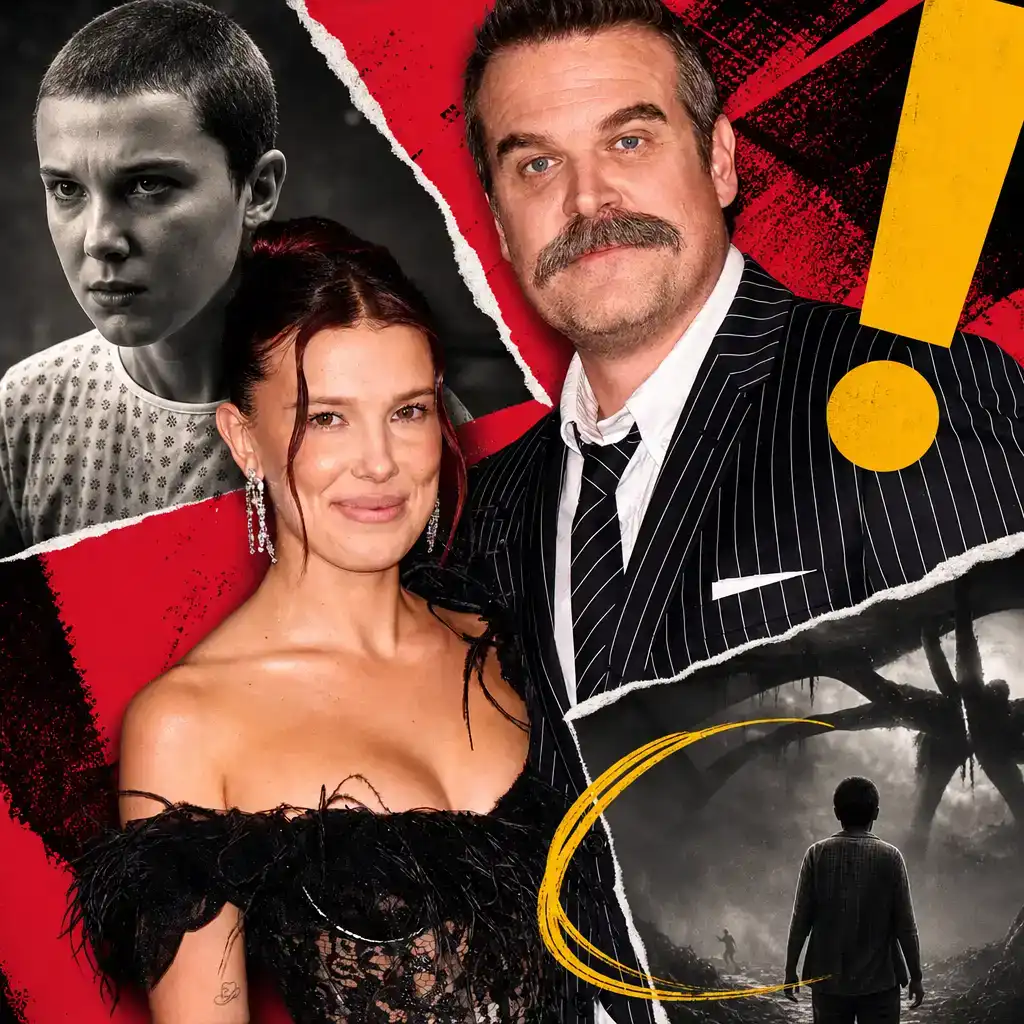
David Harbour thinks Eleven died in Stranger Things, and he is apparently not interested in cushioning that theory for anyone still hoping for a quiet cabin reunion somewhere far from government laboratories and interdimensional rot.
Speaking to USA Today at the Gotham TV Awards on June 1, Harbour was asked whether he believes Millie Bobby Brown’s Eleven survived the series finale. His answer was pretty direct.
“Do I think Eleven’s alive?” he said, before lowering his voice and adding, “I think she’s dead. I’m sorry! I’m sorry, I know.”
That is a blunt read from the actor who played Jim Hopper, Eleven’s adoptive father and one of the show’s most bruised emotional anchors. It also lands because the finale did not hand viewers a clean answer. Naturally, everyone involved has been invited to explain the ending, because ambiguity is lovely until the internet gets a calendar invite.
What happened to Eleven in the finale?
The fifth and final season of Stranger Things ended with a major sacrifice, or at least something that looked very much like one. In the finale, which arrived on Netflix on Dec. 31, Eleven appears to give herself up in order to destroy the Upside Down for good.
The scene leaves room for doubt, though. Instead of confirming her death outright, the episode gives Mike Wheeler, played by Finn Wolfhard, the final emotional argument for hope.
Mike points out that Eleven should not have been able to use her powers while affected by the military’s technology. From there, he offers another explanation: what the group saw in the rift may have been only a vision. In his version, Eleven escaped, survived, and found peace living off the grid somewhere beyond the reach of the forces that had hunted her for so long.
It is a very Mike conclusion, tender, stubborn, and built from the need to believe that the person he loves got more than a tragic ending.
Why Mike’s story matters to the group
In the closing moments, Mike’s friends do not challenge him. Lucas Sinclair, played by Caleb McLaughlin, Will Byers, played by Noah Schnapp, Dustin Henderson, played by Gaten Matarazzo, and Max Mayfield, played by Sadie Sink, all respond with the same words: “I believe.”
That line does a lot of work. It functions less like evidence and more like a ritual of farewell. The group is choosing the version of the story that lets them keep moving, even if the audience is left to wonder whether they are accepting a miracle or protecting themselves from grief.
For a series so tied to childhood bonds, imagination, and shared stories, the choice is fitting. These characters have survived monsters, laboratories, military pressure, and several years of very poor adult supervision. By the end, belief itself becomes the last thing they can offer each other.
Harbour, however, is not buying the optimistic version. His interpretation is that Eleven’s death is real, however gently the finale frames the aftermath.
Sadie Sink also reads the ending as final
Harbour is not alone in that view. Sadie Sink shared a similar interpretation during a January appearance on The Tonight Show Starring Jimmy Fallon.
“I think she’s dead,” Sink said. “I think Mike’s story is just one last story and then they say goodbye to childhood. But that’s just one final tale and that’s it.”
Sink, who was 24 at the time of the interview, also said she believes that version makes for a “stronger” ending than one where Eleven simply gets to disappear into a happy life after everything she endured.
It is a hard reading, but not a cold one. For Sink, Mike’s story is not pointless because it may be untrue. It is meaningful because it lets the characters say goodbye in the only language they have left: a story they can share.
That interpretation also fits the wider emotional shape of Stranger Things. The show has often used fantasy and horror to talk about trauma, friendship, and growing up. In that context, Eleven’s possible death is not just a plot twist. Eleven’s sacrifice may be the price of survival for someone the series treated as both a weapon and a child.
The Duffer Brothers wanted the debate
Series creators Matt Duffer and Ross Duffer have made clear that the uncertainty around Eleven’s fate was intentional. In an interview shared by Netflix after the finale, Ross addressed the open ending directly.
“She lives on in their hearts,” he said. “Whether that’s real or not.”
Matt explained that the writers wanted the ending to face the practical reality of Eleven’s life after the final battle. Even if she survived, she would not simply be free to enroll in school, get a job, and enjoy the quiet life without complications. An entire branch of the United States military had been pursuing her.
“What we wanted to do was confront the reality of what her situation was after all of this and how could she live a normal life,” Matt said. “Mike is the optimist of the group and has chosen to believe in that story.”
That framing leaves the finale hanging between grief and hope. If Eleven died, Mike’s story becomes an act of love. If she lived, it suggests the only peace available to her would be hidden, distant, and deliberately undocumented.
Either way, the ending refuses to make comfort easy. Harbour and Sink may see finality. Mike chooses faith. The Duffers leave the door cracked open just enough for viewers to argue in peace, or at least in long comment threads.