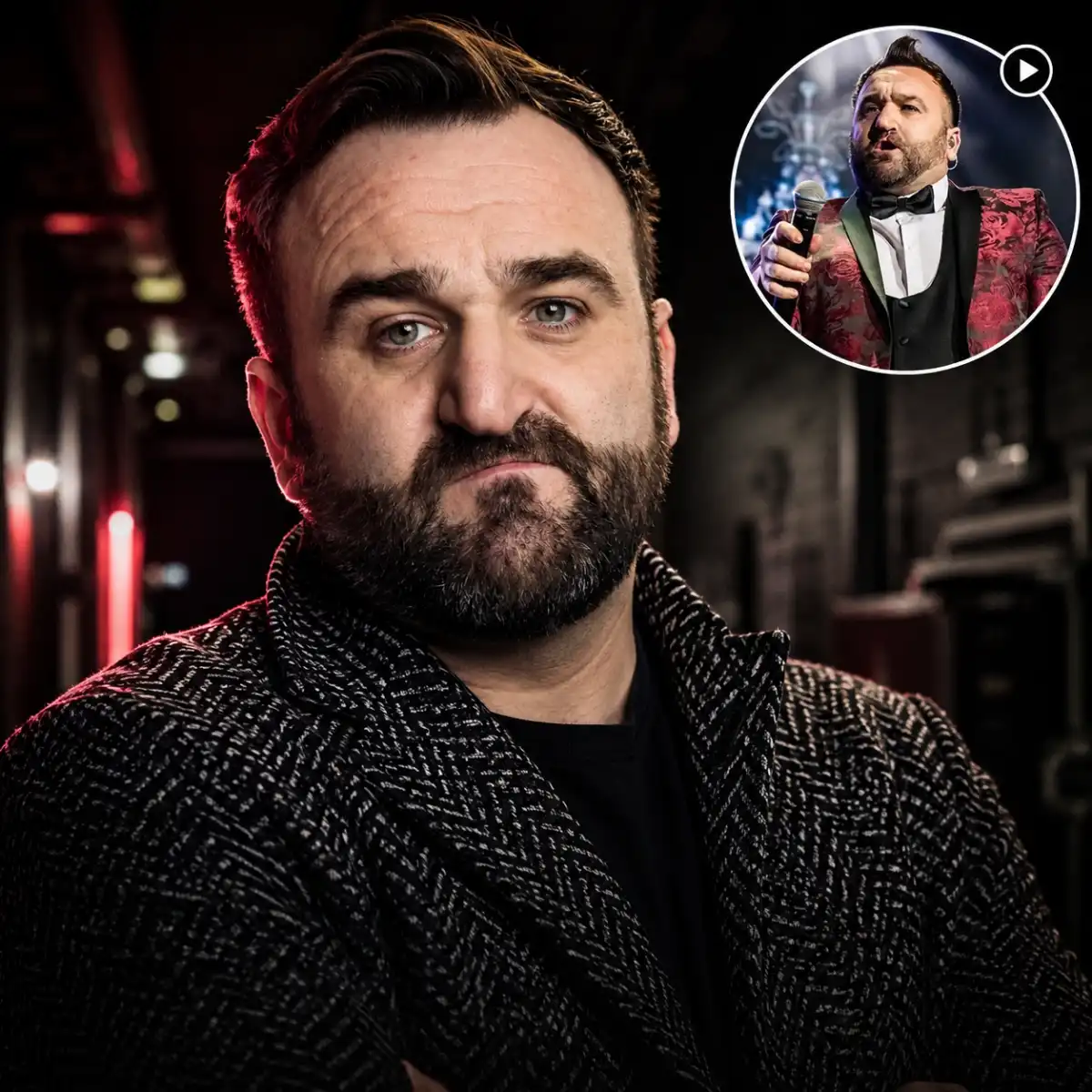
Danny Tetley has been released from prison after serving six years of a sentence for child sex offences involving seven teenage boys.
The former The X Factor contestant, now 44, was jailed after admitting offences against boys aged between 14 and 16. Prosecutors said he offered victims “hundreds of pounds” for sexualised images and videos.
Tetley, who reached the semi-finals of The X Factor in 2018, was sentenced at Bradford Crown Court in 2020. The case was uncovered after a parent became worried about the amount of money one of the boys had and checked his phone.
What Tetley was convicted of
Tetley admitted seven charges of causing sexual exploitation. He also admitted two counts connected to the distribution of indecent images.
The offending took place over several months and involved seven boys. In court, prosecutors said Tetley used money to persuade teenagers to send explicit material. This matters because it was not a single incident or a vague online lapse, however convenient that framing might be for anyone trying to soften it.
During sentencing, Judge Jonathan Durham Hall QC described Tetley’s behaviour as “highly predatory and manipulative.” He said Tetley had “traded” on his public profile as a television performer while committing the offences.
Judge Hall told the court: “This has been most distressing for the victims.” He also said grooming was central to the case, adding: “What you demanded and showed were blatant and the disgusting level to which you sank, Mr Tetley, was quite unbelievable.”
Why he has been released now
Tetley was originally given an extended sentence of 17 years, with nine years to be served in prison. That sentence was later reduced on appeal to an extended sentence of 14 years, made up of a nine-year custodial term and five years on licence.
He has now been released after serving two-thirds of the nine-year prison term.
The Ministry of Justice confirmed his release and said: “These were horrific crimes and our thoughts remain with the victims.
“Offenders whose release is directed by the independent Parole Board are supervised by the Probation Service and are subject to strict conditions, including restrictions on their movements and contact with others.
“They can be recalled to prison for breaching these conditions or exhibiting behaviour suggesting they pose an increased risk to the public.”
Release on licence does not mean the sentence has simply ended. It means Tetley will remain under supervision and can be returned to custody if he breaches the conditions set for him.
What was said in court about his public profile
At the time of sentencing, Tetley’s defence argued that his offending followed the pressures of fame. Andrew Dallas, defending, told the court Tetley had been “effectively alone in a very public world, emotionally vulnerable and been given money for his singing, all of which is gone.”
He added: “By the time he was locked up, he was penniless. It was easy come, easy go, as the saying goes.”
Dallas also said Tetley’s motivation was to obtain images of the teenagers and that he had no interest in anything more.
The court did not accept that as mitigation for the harm caused. Judge Hall said Tetley’s celebrity was “now gone, tarnished and destroyed,” and focused on the distress caused to the victims and the manipulative nature of the offending.
The case’s weight sits away from the television backstory: seven boys were targeted, a parent’s concern exposed what was happening, and the criminal justice process followed. The fact that Tetley once appeared on a prime-time talent show explains why the case drew attention. It does not change what the case was about.