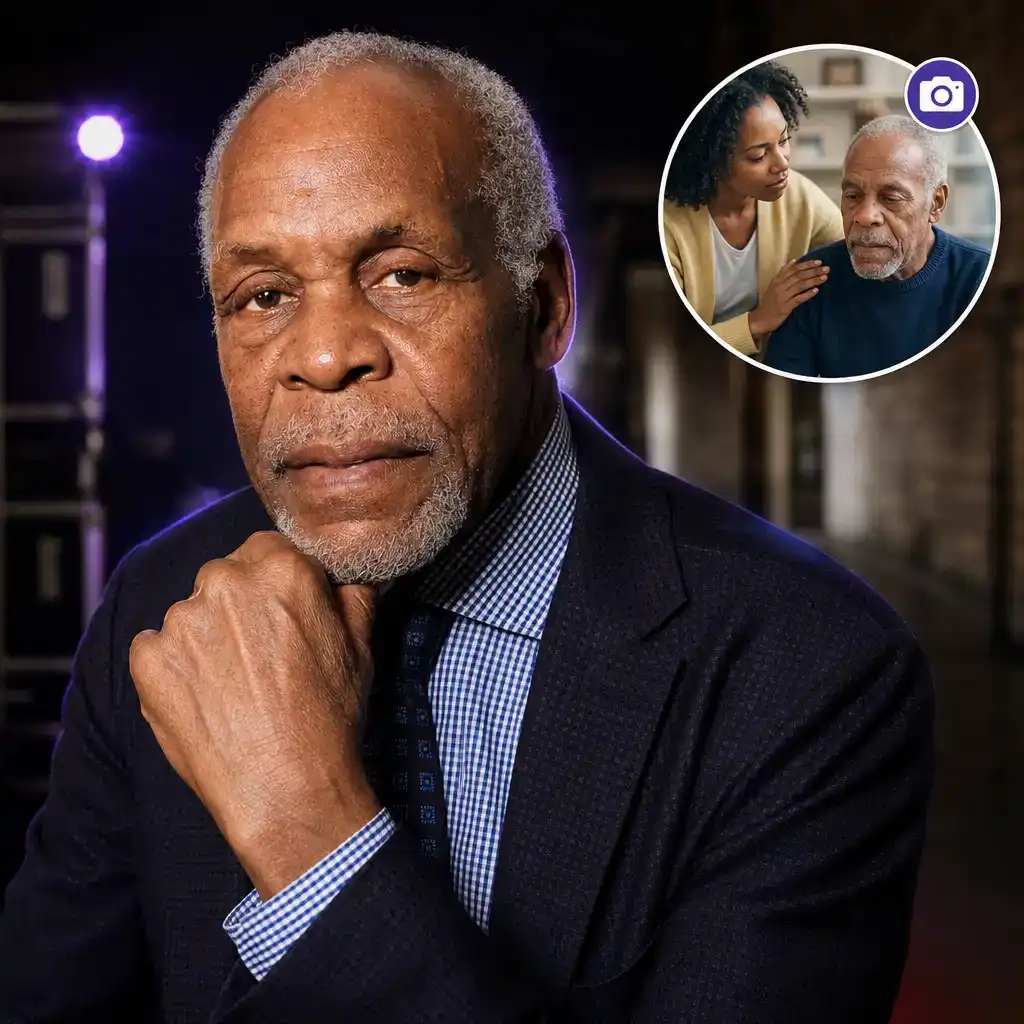
Danny Glover Alzheimer’s diagnosis is now public, after the actor spoke for the first time about being diagnosed with the disease in 2023. Because so much of his career has circled memory, justice, family and the work of being heard, the news carries a particular weight.
The 79-year-old Lethal Weapon and The Color Purple actor opened up in an interview with People published July 1, describing both the reality of the diagnosis and the unfinished emotional work of accepting it.
"I'm still not accepting in my mind all parts of it," Glover said. "There are the moments that you keep remembering that validate the fact that you can remember stuff. And there are moments I'll never forget."
What Danny Glover said about living with Alzheimer’s
Glover described the diagnosis as something he is still learning to live with — not only as a medical fact, but as a change in how he thinks about the future.
Accepting it, he said, means "in some sense, acknowledging that it's happening to you and at the same time that there are millions of people suffering from it."
That response sounds like Glover: personal, but never only personal. Even while discussing his own health, he placed the experience inside a wider human reality. Alzheimer’s is not exactly rare, which is not the same as saying it is easy. Illness does not get less frightening just because many people share it.
In a July 1 appearance on Today with Lester Holt, Glover said he had already made some peace with the possibility of losing memories as the condition progresses.
"I could live with it, in a sense," he said.
He added, "I'm sure, as it advances, things are gonna be different and changing."
Why Places in the Heart still matters to him
As Glover reflected on his life and career, he pointed to one project as especially meaningful: the 1984 film Places in the Heart, which starred Sally Field.
The film carries a painful personal connection. Glover dedicated the project to his mother, Carrie, who died in a car accident on the same day he told her he had gotten the role.
That kind of detail does not need much decoration. It explains, plainly, why one film can become more than another line on a résumé. For Glover, the role became tied to grief, pride and a private farewell he never got to complete in the way anyone would want.
Over the decades, he has built a career that moved between major studio work and politically engaged projects, but he has also consistently tied his public life to activism. In the interview, he traced that commitment back to his parents.
"The one thing about my parents was their activism," he said. "A sense of being and belonging and making the contribution. When I saw the Montgomery bus boycott (in 1955-56), I knew I wanted to be like those people. I wanted to be in that moment and part of the role."
How Glover is focusing on young people now
Even as he faces the progression of Alzheimer’s, Glover said he wants to keep speaking to younger generations about responsibility, art and justice.
"It's talking to young people and their responsibility," he said. "We have challenges in the world. I think art becomes a reframe, a way of looking at that."
For Glover, art has never been just a performance space. It has been a way to examine systems, communities and the possibility of change. That may sound grand in less careful hands, but he has spent enough years doing the work to say it without sounding like a motivational poster.
"Justice is our collective responsibility," he continued. "One thing I learned from my parents most of my life is the capacity of people to change through their own. They become the architect of their change."
The wording is a little hard to parse, but the idea is clear: people are not stuck, and change is something they can help build for themselves and others.
Why his daughter says he chose to speak now
Glover’s daughter, Mandisa Glover, also spoke with Holt about her father’s decision to share the diagnosis publicly. Mandisa is Glover’s daughter with his ex-wife, Asake Bomani.
She said the timing was about control, not attention.
"We all get old. It happens. That's what I think is important: that he tells his story and he has ownership of his life," Mandisa said. "The time is now. What better time than now for him to speak for himself?"
She also acknowledged the practical and emotional pressure families can feel when people ask questions and the truth is more complicated than a polite answer.
"It's important because people ask questions sometimes," she added. "I don't want to be a dishonest person and say, 'Oh, yeah, everything is all right. It's all great.'"
That honesty makes Glover’s announcement feel less like a celebrity health disclosure and more like a family choosing to be clear. The diagnosis is difficult, and the road ahead may change. For now, Glover is speaking in his own voice, while he can, about memory, loss, responsibility and the life he is still living.