Spoilers ahead for The Boroughs Season 1, including the finale.
The Boroughs Season 1 ending gives Netflix’s retirement-community mystery a full meal of answers, then quietly slides several more questions onto the plate. After eight episodes of desert weirdness, stolen life force, suspicious management and one very strange creature called Mother, showrunners Jeffrey Addiss and Will Matthews say the finale was designed to feel complete, but not closed.
That is useful, because “closed” would be a generous description for a season that ends with Sam’s reflection glitching in a bathroom mirror.
What happened in the finale?
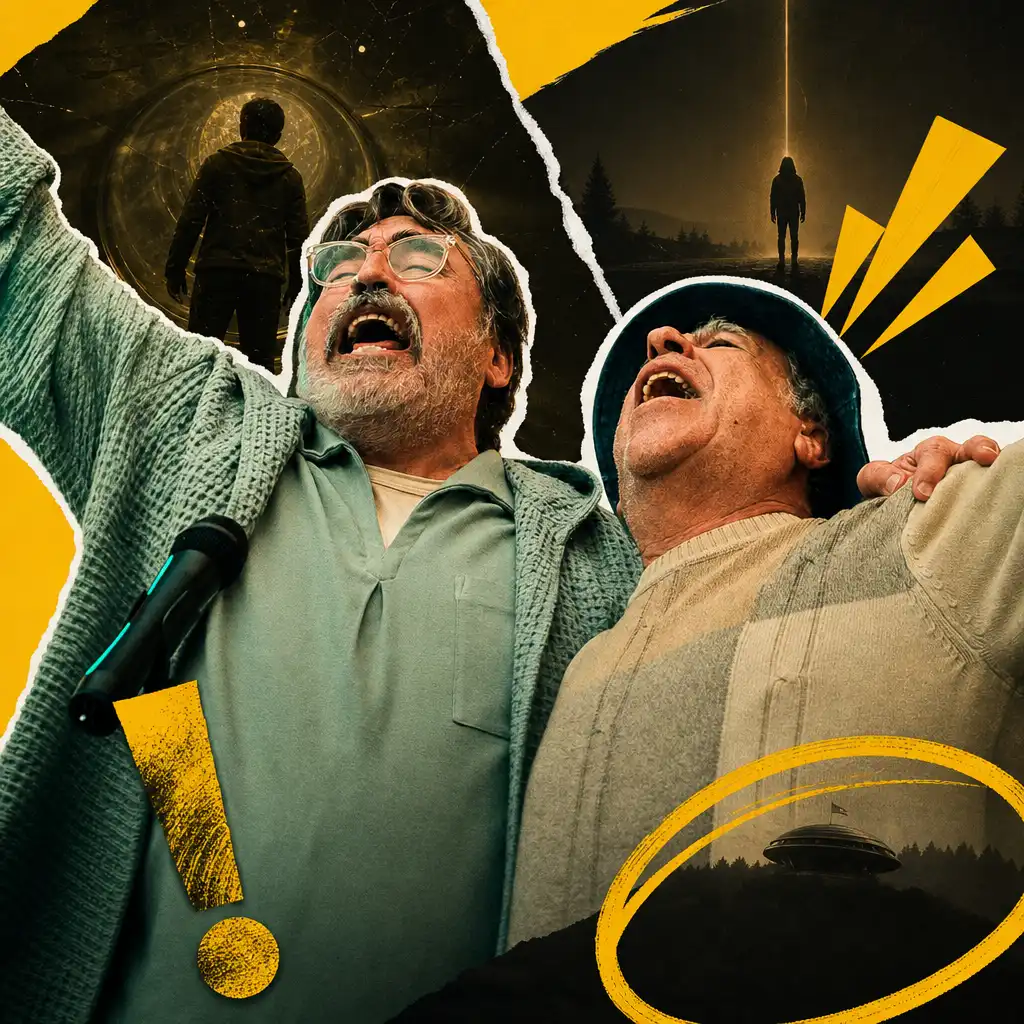
The season begins with Sam, played by Alfred Molina, trapped in The Boroughs, a retro-futuristic retirement community in the desert. Sam is a widowed former engineer who never wanted to live there. His late wife, Lilly, played by Jane Kaczmarek, signed the contract before she died, leaving him stuck in a place that seems cheerful in the way only deeply suspicious places do.
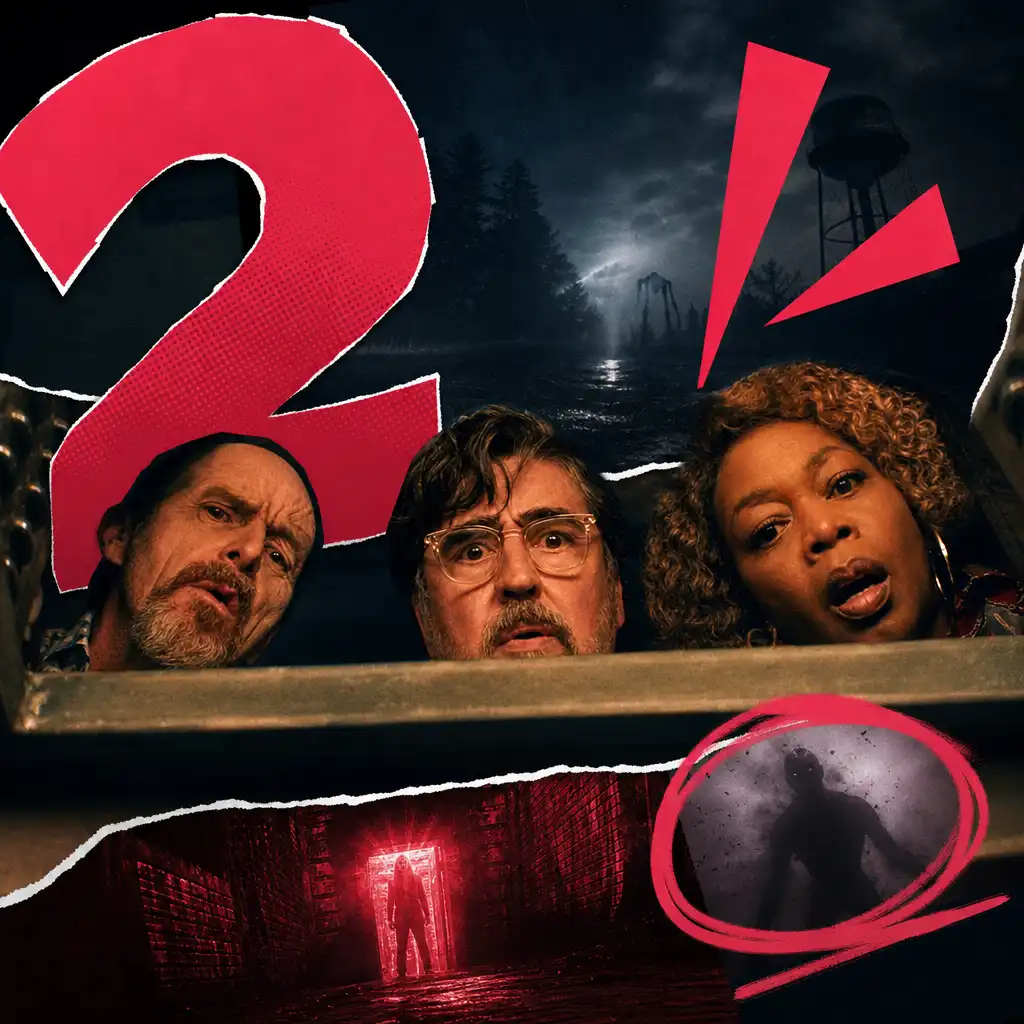
He eventually finds a small circle of friends: Renee, the upbeat art teacher played by Geena Davis; Judy, a former journalist played by Alfre Woodard; Judy’s often-stoned husband Art, played by Clarke Peters; Wally, a cancer-stricken former scientist played by Denis O’Hare; and Jack, a friendly neighbor played by Bill Pullman, who is also having an affair with Judy.
Then Jack is killed by one of the monsters. Sam and the group discover the creatures are the children of Mother, who has been captured and used by The Boroughs’ leadership. Her offspring drain spinal fluid from older residents and bring it back to feed her. In return, select staff members drink Mother’s amber “goo” to stay young.
Who were the real villains?
By the finale, the show has made a grim little adjustment to the monster math. Mother and her children are not the true threat. The real villains are Blaine, played by Seth Numrich, and Anneliese, played by Alice Kremelberg, a nearly century-old couple who created The Boroughs at least partly as a personal fountain of youth.
Sam’s connection with Mother helps him understand that she has been trapped and exploited. Meanwhile, Renee and her younger boyfriend, former security guard Paz, played by Carlos Miranda, help free Mother’s children. Wally gets Mother out in time for her to heal Judy, who has been stabbed by Blaine.
Blaine follows the group back to Sam’s house. There, Sam’s daughter Claire, played by Jena Malone, proves she inherited the family engineering gift by repairing the old television-powered weapon that can harm people who have consumed Mother’s goo. She uses it to make Anneliese explode and badly injure Blaine.
The group brings Mother back to the cave with the strange peach tree. Blaine arrives and attacks Sam, but Mother explodes, burning Blaine and sending Sam into a vision of Lilly.
Why does Sam glitch in the mirror?
After The Boroughs appears to be saved, the survivors gather for a barbecue. Judy and Art have reconciled after her near-death experience. Renee and Paz are leaving on a trip, with Wally tagging along. Sam goes into the bathroom to check a wound on his head, then sees his reflection glitch in the mirror, the same visual language used earlier for Mother’s telepathic visions.
Addiss was clear that the moment was not random.
“That we have ideas for season two [and] know where [it] goes, and it builds directly off that moment, and nothing about that shot was done idly,” he said. “It was a tip of the cap to where we want to go, which means we can't give away what it means.”
The detail that matters is that Sam himself does not glitch. His reflection does. Earlier in the season, Sam saw glitching visions of Lilly, which turned out to be Mother trying to reach him through his grief and closeness to death. The cleanest reading is that Mother may not be entirely gone, even after the explosion. If she is still connected to Sam, the poor man’s retirement is becoming a very demanding group project.
Is there really a three-season plan?
Addiss and Matthews say they have a larger structure in mind, not just a pile of mysteries waiting to be arranged later.
“We have a very specific three-season plan, and we think we know the last shot of the last scene of the last episode,” Addiss said. “How we get there might change a little, but we have the answers to all the questions, and a plan of how and when to answer those.”
He said Season 1 was meant to feel emotionally complete in case Netflix does not order more, while still leaving room for bigger answers.
“We really wanted [you] to feel like you got a full story, in case that's all we get,” he said. “If it’s a success, we'd like to tell you a bit more about what's going on. What is Mother? We know the answer to that.”
Matthews and Addiss also pushed back on the idea that the show would become a monster-of-the-season format.
“We think of this as one large, complex story where crazy stuff continues to happen that's surprising, but it is one story to us,” Addiss said.
So yes, Mother’s story seems likely to continue if the series does, though future seasons may introduce new threats and stranger pieces of the mythology.
What did the Duffer Brothers contribute?
The Boroughs is executive produced by Ross Duffer and Matt Duffer, the creators of Stranger Things. Their influence is not exactly hidden in a locked basement. Still, Addiss and Matthews said one of the biggest pieces of advice from the Duffers was structural rather than stylistic.
“The idea of the first season having both a satisfying ending and also cracking the door for an interesting Season 2 came from them,” Matthews said.
According to Matthews, the Duffers told them, in effect, that no one ever knows what will happen next in television. The safest creative move is to tell a complete story, then leave space for more.
“Our first draft has had a little bit more, not quite an ending, maybe kind of a beginning,” Matthews said. “It was a little bit in the middle. And they were like, ‘Do this… And then that.’”
That guidance is visible in the finale: Mother is freed, Blaine and Anneliese are gone, Sam has reached a real emotional turning point, and then the mirror suggests the universe is not finished inconveniencing him.
Was the bathroom scene a Stranger Things homage?
The final bathroom beat invites comparison to Stranger Things Season 1, where Will, played by Noah Schnapp, steps away from a family meal and coughs up a slug, teasing that the nightmare is not over.
Addiss confirmed that the resemblance was intentional.
“Setting that in the bathroom was a definite, loving homage to Stranger Things,” he said. “And [the Duffers] laughed when they read [it]. I want to be clear, they knew what we were doing, and they thought it was funny.”
He added that the show contains many tributes to stories the creators love, and Stranger Things is one of them.
The opening scene, however, was not meant as another Stranger Things nod, even though it features a bike moving through a suburban neighborhood. Addiss said that was aimed more at E.T. the Extra-Terrestrial, especially because Dee Wallace, who played Mary Taylor in Steven Spielberg’s 1982 film, appears as the first character viewers meet in The Boroughs.
Of course, the bikes in Stranger Things already owe a debt to E.T.. This is how homage becomes a filing system.
What other Easter eggs did the show include?
Addiss and Matthews pointed to several references built into the season, some subtler than others.
- In the Manor, the asylum-like area for residents who are considered mentally unwell, a man is reading a first edition of Stephen King’s Salem’s Lot. Addiss said it was his personal copy.
- Addiss described one early creative thought about the series as “Salem's Lot, but what if the town was worth saving?”
- Matthews highlighted the “not that subtle” idol from Raiders of the Lost Ark, a nod to Alfred Molina’s film debut as Satipo in the 1981 movie.
- Renee’s convertible going over a cliff is a clear reference to Thelma & Louise, though this time Geena Davis’s character is not in the car.
“One hundred percent, you’ve got Geena Davis in the desert with a car,” Addiss said of the Thelma & Louise reference. He added that the idea was built in early, and that they were “really glad that she agreed to do it, or it might have been awkward.”
There are worse reasons to cast an Oscar winner than “we already wrote the car joke.”
Was Sam’s vision of Lilly real?
Throughout the season, Sam sees Lilly in visions, but those appearances are either memories or images Mother uses to communicate with him. The finale changes that, according to Addiss.
After Mother explodes, Sam sees Lilly again, and she tells him the moment is real. Addiss said viewers can take that seriously.
“In our brain, that’s her,” he said. “This guy went on a journey, and his reward for making that change from a guy who wants to kill a monster to [a guy who wants to] save a monster is one moment with his wife.”
He said it is the first time the audience sees Lilly herself, not Sam’s memory of her and not Mother borrowing her image.
“Where does it take place? How does time really work? We can unpack [that] in further seasons,” Addiss said. “But yes, that is really her, and it is real.”
That answer matters because Sam’s emotional arc is the spine of the season. He begins as a man trapped by grief and resentment, then chooses compassion for a creature he once saw only as a monster. His reward is not youth, power or escape. It is one honest goodbye.
Who runs The Boroughs after Blaine and Anneliese?
Blaine and Anneliese were monstrous, life-draining figures, but they also ran a community with hundreds, possibly thousands, of residents. Their deaths leave an obvious logistical problem: somebody has to manage the place, preferably someone less committed to spinal-fluid harvesting.
Addiss would not reveal much.
“That’s a ‘down the road’ question,” he said. “Yeah, there is an answer. We can tell you their name. But yeah.”
When asked whether the top job might rotate, he joked, “Yeah, we'll just kill them every season and be surprised every time.”
The answer suggests that a future season would deal not only with cosmic or creature-based mysteries, but also the ordinary horror of institutional control. The Boroughs is still standing. The residents are still there. And the systems Blaine and Anneliese built may not vanish just because the founders did so in a dramatic burst of justice.
Are Blaine and Anneliese vampires?
In the finale, Blaine and Anneliese reveal long fingernails, sharp fangs and a visual style that strongly recalls vampire imagery, especially Nosferatu. Addiss said that does not mean the show is officially calling them vampires.
“It wasn't us saying they are vampires,” he explained. “It was us saying that the nature of how they live is vampiric, right? They suck fluids out of other people to extend their own lives.”
He said the show is “absolutely jamming on vampire myths and legends,” without defining Blaine and Anneliese as this world’s literal version of vampires.
Addiss also mentioned that The Lost Boys was among the films that inspired The Boroughs, and Matthews pointed to The Dark Crystal as another influence, because it features villains draining life force from others for their own benefit.
The vampire comparison works because it is less about fangs than appetite. Blaine and Anneliese have built an entire community around their fear of aging and loss. The fact that they also look ready to haunt a silent film is just the design department being direct.
What is the peach tree, and what happens without the goo?
One of the finale’s biggest unanswered questions is the strange tree in the cave, especially the peach Art eats earlier in the season. That fruit makes him temporarily young. When the effect wears off, after he has even eaten the pit, he suffers intense pain.
Addiss said the tree almost got explained in Season 1, but the answer did not fit cleanly.
“That was a question that we went back and forth on, answering this season or not, and ultimately decided not to, because finding a way to get to the answer felt a little crammed in,” he said. “We had an answer. Of course, that answer might change now that we haven't told anybody, but it'll be answered.”
Wally’s situation is slightly different. He is given Mother’s amber liquid as payment after Blaine briefly forces him to work on extracting more life-giving essence from her. The goo cures his cancer and makes him younger, but Addiss and Matthews suggested it may not have the exact same withdrawal effect as Art’s peach.
“I think he would definitely have a hangover,” Addiss joked.
Matthews noted that Wally consumed “a different form of blood” in a more controlled way.
As for characters like Hank, the sadistic security guard played by Eric Edelstein, who were using the goo and now have no supply, Addiss said that question will be answered later. Matthews added that Hank’s final choice matters because he knows that without Mother, “it's not going to go well for him,” and chooses to let time proceed anyway.
How did the actors handle Anneliese slapping Blaine?
One small but memorable finale moment finds Anneliese slapping Blaine several times while he tries to calm her down. Matthews said Alice Kremelberg and Seth Numrich wanted to make the scene feel real, but there were obvious rules against actually hitting a scene partner.
“I was there that day, and they're young actors,” Matthews said. “They really want to do a good job, and they very clearly were not allowed to hit people on set.”
He said the actors quietly asked if they could do one real slap. Matthews initially said no, then allowed one, with a condition.
“I said, ‘All right, listen, you can do it once, but then I'm going to yell at you in front of everybody and say you can't do it again,’” he recalled.
So among the multiple onscreen hits, only one was real. The rest were performed the safe, professional way, which is generally better for workplace morale and cheekbones.
Why is Blaine a mirror of Sam?
The finale gives Blaine a moment that complicates him. He appears to break somewhat from Anneliese during a speech to the community, and he seems more regretful than she does. Addiss said that difference was intentional.
“We really think that he did it all for her,” he said, meaning Blaine created and maintained The Boroughs out of love for Anneliese and fear of losing her.
Matthews said they took a lesson from Raiders of the Lost Ark: the villain should resemble the hero as much as possible.
“If the show is about Sam, a guy who's very much in love with his wife [and] dealing with losing her, the bad guy at some point has to realize, ‘Oh, he's a guy who's very much in love with his wife, and he's facing the possibility for the first time of losing her,’” Matthews said.
Addiss put it more simply: Blaine built The Boroughs because “he doesn't want to go through what Sam did.”
That makes Blaine a dark reflection of Sam. Both men are shaped by love and the terror of loss. Sam eventually accepts grief and chooses mercy. Blaine builds an exploitative geriatric machine and feeds a captive creature. Similar starting point, very different customer service model.
Who is Mother, really?
In the finale, Blaine tells Sam, “You have no idea what Mother is. What she’s capable of.” Addiss said that line points directly at the central mystery of the series.
“That is the question of the whole show that we're going to answer, over hopefully multiple seasons,” he said. “The language there was, I will say, very carefully chosen by us. That is not idle talk.”
Matthews added that Blaine is not lying, but he also does not have the full picture.
“He knows a little bit more than Sam. He doesn't know everything. Sam doesn't know that much. Maybe even Mother doesn't know that much. But Jeff and I do know the answer,” Matthews said.
Asked whether Mother might be an angel, especially given the presence of the digital assistant Seraphim throughout The Boroughs, the showrunners declined to answer. Addiss joked that they would do “the reverse” of Mike Flanagan’s Midnight Mass, but said they are keeping their answer private for now.
For the audience, the important point is that Mother is not simply a trapped creature or a plot device for immortality goo. The showrunners are treating her identity as the story’s big engine.
What would Season 2 be about?
Addiss and Matthews did not reveal plot details for a possible second season. They did, however, offer a thematic clue.
If Season 1 is about Sam moving through grief, finding community and learning to see the supposed monster differently, Season 2 would ask a new question.
“What would you do with a second chance?” Addiss said.
That fits the finale’s emotional and supernatural leftovers: Sam has had one impossible moment with Lilly, Wally has been physically renewed, Mother may not be gone, and The Boroughs itself has survived its founders. Nearly everyone left standing has been changed by contact with stolen time.
Whether Netflix gives the show more room to answer those questions is still the practical mystery. Creatively, Addiss and Matthews say they know where they are going. The mirror glitch was not a shrug. It was the next door opening, politely and with deeply unsettling lighting.