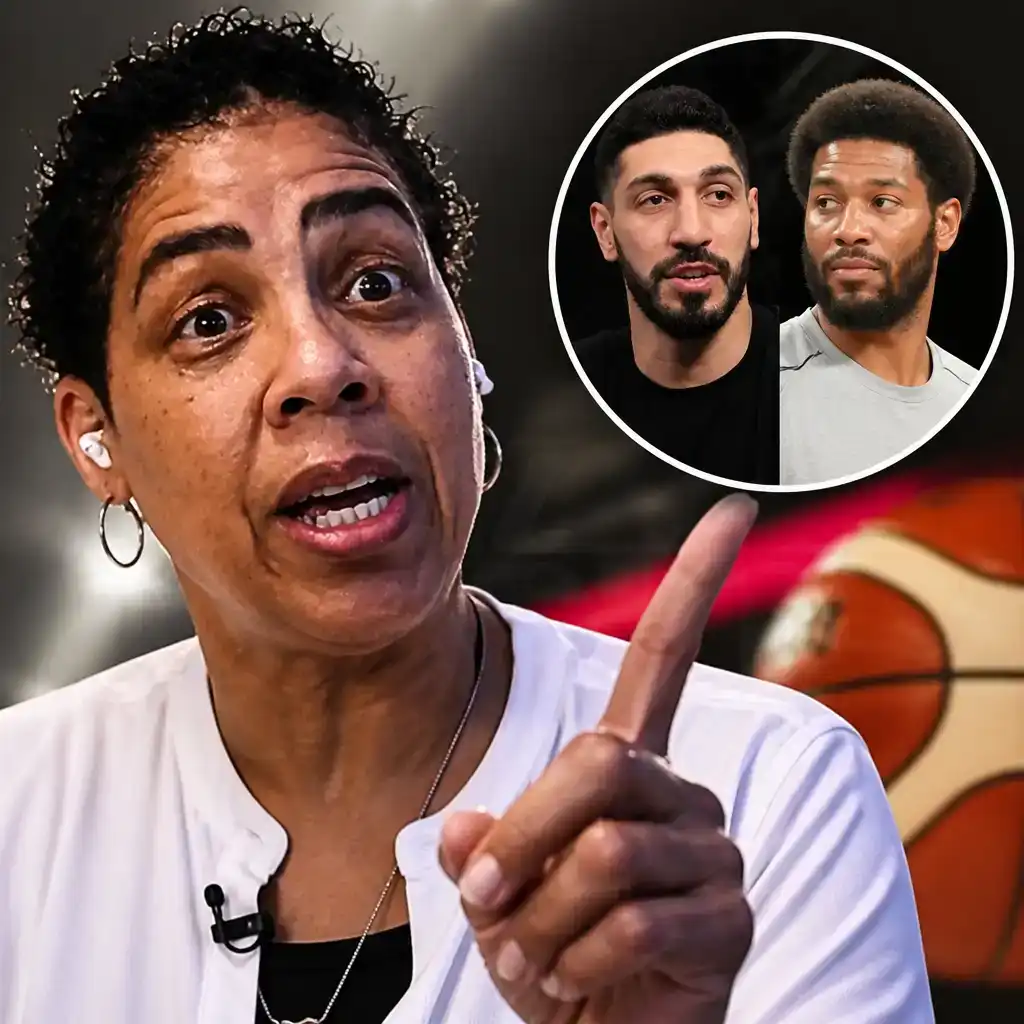
Cheryl Miller has no interest in treating the 2027 WNBA draft declarations by Enes Kanter Freedom and Royce White as serious basketball business. Speaking to TMZ Sports at Los Angeles International Airport on Tuesday, August 11, the Hall of Famer dismissed the former NBA players as outsiders trying to drag the league into a political argument.
“I'm not giving them, those two, in particular, a whole lot of thought, because there's outsiders looking to hijack our network,” Miller said. “It's horrible energy. It's horrible energy.”
She said both men would once have been welcome courtside. That invitation has apparently expired.
“But now all of a sudden, y'all got a collective think tank?” Miller said. “Man, shut that noise up.”
Declaring for the draft does not guarantee a place
Freedom and White said they intend to enter the WNBA draft in 2027 as part of the political dispute over transgender athletes in women’s sports. AS and Cadena SER both reported their announcements, but the WNBA had not publicly confirmed either man as eligible as of August 12.
Freedom said he and his team had reviewed the league’s eligibility guidelines and argued that the rules should apply “equally, consistently, and without exception.” He claimed to meet every requirement. The league itself had not endorsed that reading.
The WNBA’s published guidance includes age and college-status rules for domestic prospects. It does not say that publicly declaring oneself eligible automatically secures admission to the draft. A social media announcement, inconveniently, is not the same thing as league approval.
White made the political purpose especially difficult to miss. “I'm transgender,” he said while announcing his planned declaration, adding, “My wig is in the mail.” Freedom had already floated a similar scenario during a 2023 Newsmax interview, when he discussed wearing a wig and “dominating the WNBA.”
Neither announcement resembled a conventional attempt at a professional comeback. Both were designed to make a point about transgender eligibility, with the league cast as the stage whether it agreed or not.
Miller wants the basketball to remain the story
Miller said her immediate concern was the closing stretch of the regular season. At the time of the interview, 13 games remained, with teams in fourth through eighth place competing for playoff positioning and home-court advantage.
“All I'm focused on, for real, for real, 100%, is 13 games remaining in The Dub,” she said. “Playoffs are around the corner. You got spots four, five, six, seven, and eight battling to get home court position. That's what my focus is about.”
She did not argue that the transgender-athlete question should be ignored indefinitely. Instead, Miller called for the league and other stakeholders to address it during the offseason, away from the immediate pressure of the playoff race.
“We want to protect everyone. And we don't want to exclude anyone,” she said. “But I just think we all have to sit down in the off-season and collectively get our heads and minds around this issue. Obviously, it's a hotbed.”
Her preferred approach was simple: “I would definitely let cooler heads prevail right now.”
That position places Miller between two louder camps. White House press secretary Karoline Leavitt endorsed Sophie Cunningham’s opposition to transgender participation, saying, “We want to protect women and girls.” Minnesota Lynx coach Cheryl Reeve, meanwhile, described increasingly aggressive attacks on transgender people as “sort of sickening.”
A hard foul became another political dispute
The same wider argument has also engulfed an ordinary piece of WNBA discipline. On August 8, DiJonai Carrington struck Cunningham around the head during a hard foul. Officials reviewed the play, upgraded it to a Flagrant 2 and ejected Carrington.
Carrington was not suspended for the following game. Miller considered that the end of the matter.
“It's not a fiasco,” she said. “It was a hard foul. She was ejected for it. She wasn't suspended the next game, so play on.”
Florida Attorney General James Uthmeier later characterized the incident as potential “assault.” The comment pulled a refereeing decision into the political attention surrounding Cunningham, whose comments about transgender athletes had already won support from Trump administration officials.
Nothing in the reporting established that the foul was politically motivated. The WNBA handled it through its review and ejection process, which is generally what leagues maintain those systems for.
Miller nevertheless sees one benefit in the arguments, declarations and state-level commentary now orbiting the season: more people are watching.
“Because it's all eyes on the W,” she said.